Terrain
Will Starlink work in a valley, on a hillside or in the mountains?
Mountains don’t rule out Starlink. Steep walls close to the house can. Here’s how to read the skyline from your own spot, why poles rarely beat a ridge, and what helps instead.
$100First Starlink? The pre-order checklist and our referral linkUsually yes, unless a ridge rises high into the dish’s sky. A hill is measured exactly like a tree: by how many degrees it climbs above the horizon, seen from the dish.
Under about 20° is out of the way; over about 35° is inside the dish’s view (our reading of Starlink’s numbers). The differences from trees are practical: you can’t trim a mountain, and a taller pole barely helps against a ridge a mile away. What helps is a different spot, higher up the slope or out where the valley opens.
A ridge is an angle, just like a tree
Starlink doesn’t publish anything specific to valleys or mountains. What it does say applies everywhere: the dish does best with open sky and can often get by with part of it. A ridge is just a very large, very permanent obstruction, so the same test works. From where the dish would sit, how high does the skyline rise above the horizon, and on how many sides?
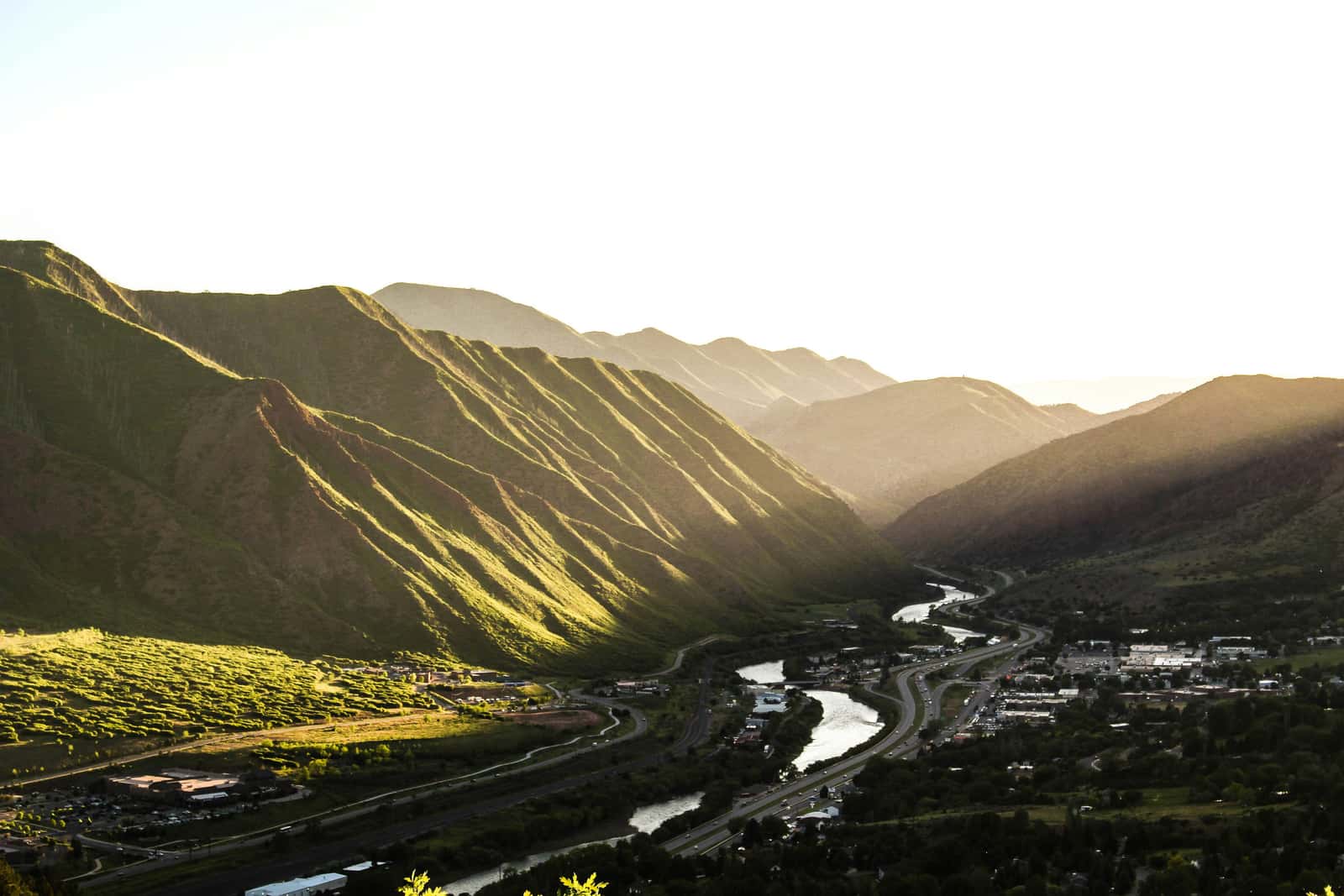
Two things make the valley floor harder than it looks from the road. First, both sides count: Starlink’s business install guide asks for open sky from about 20° above the horizon, all the way around (360°), for each dish., and a valley takes a bite out of the sky on two sides at once. Second, ridges are long: a tree blocks a narrow slice of the sky, while a ridge blocks a wide one.
Why a taller pole rarely beats a ridge
With trees, height is the fix: lift the dish and the treetop sinks in the sky. With ridges it hardly works, because the ridge is so far away that a few dozen feet makes almost no difference to the angle.
| Skyline | Height and distance | Angle, dish on the ground | Angle, dish 40 ft up |
|---|---|---|---|
| Nearby tree | 60 ft tall, 40 ft away | 56° | 27° |
| Distant ridge | 1,000 ft high, 3,000 ft away | 18.4° | 17.7° |
So in hilly country, think sideways before you think up. Starlink says that when there’s no clear view from the ground, you should use an elevated spot such as a roof, pole or wall, and that’s still right for the trees around the house. For the ridge itself, a spot a few hundred feet farther from the steepest slope, or partway up the opposite side of the valley, usually does more than any pole. Starlink publishes no minimum mounting height for homes, so let the skyline decide.
Valley floor, hillside, canyon or hollow
Typical shapes of land, with an example skyline worked out from the ground (our geometry, example numbers):
Shenandoah, Willamette or San Luis Valley
Wide valley floor
The ridges are miles away, so even big mountains sit low in the sky. Trees near the house matter more than the mountains.
600 ft ridge, 6,000 ft away = 6° Usually fine
a home cut into a slope
Hillside or bench
Open on the downhill side, blocked on the uphill side. The closer the slope rises behind the house, the more sky it takes.
300 ft ridge, 700 ft away = 23° Borderline: scan it
Colorado and Utah canyon towns
Narrow canyon
Steep walls close on both sides. Often the whole lower half of the sky is rock. Look for a wider bend or a spot partway up.
800 ft ridge, 1,000 ft away = 39° Hard: find another spot
WV, eastern KY, east TN
Appalachian hollow
Narrow, deep, and topped with hardwoods that add their height to the ridge. Among the hardest places in the lower 48.
500 ft ridge, 600 ft away = 40° Hard: find another spot
A ridge top or an open slope, whichever way it faces, is usually the easy case: the land falls away and the sky is wide. Remember that the shape of the land around your spot matters more than the elevation on the map: a house at 8,000 ft in a canyon can be harder than one at 500 ft on a hill.
Ridges plus trees: add them up
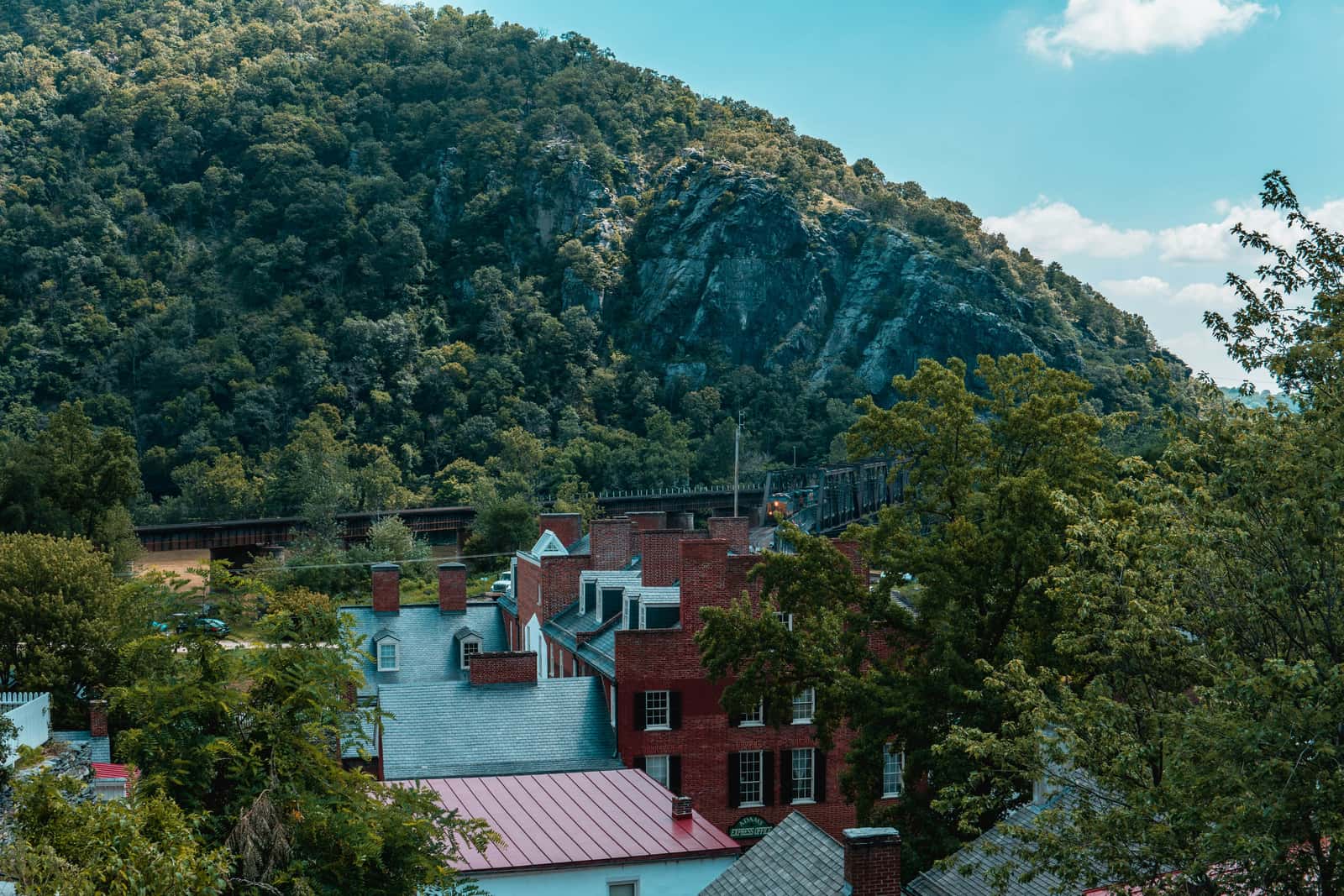
Most mountain homes have both, and trees standing on a slope add their height to it. A slope that rises 200 ft, 400 ft from the house, tops out at about 27°. Put 80 ft firs on it and the skyline climbs to about 35°, the edge of the dish’s view. On a sky map, the ridge takes the bottom of the sky all around, and the trees poke up from it.
That’s often good news: the ridge can’t be changed, but the trees near the house sometimes can, and they’re the part that matters most. For tree fixes, see will Starlink work with trees. For the math, the sky angle calculator works for ridges too: enter the ridge’s height above you and its distance.
Check a valley home in five steps
Step 1: Stand where the dish would go
At the height it would sit: on the ground for a yard install, at a window or on a ladder for a roof.Step 2: Trace the skyline all the way around
Ridges are long. Sweep your eyes along each one and find its highest point as seen from you, including any trees standing on top.Step 3: Count fists to the highest point on each side
Arm straight, fist on the horizon, stack up to the skyline. Under 2 fists is out of the way; over 3.5 fists is inside the dish’s view.Step 4: Repeat from a second and third spot
Try the far side of the lot, a spot farther from the steepest slope, or partway up the opposite hillside. In terrain, a few hundred feet sideways often beats 20 feet up.Step 5: Confirm the best spot with the Starlink app
Run the app’s sky scan at that exact spot and height before you order or mount anything.
Height above you, not height above sea level
For the calculator, use how much higher the ridge top is than your spot (a topo map or a phone altimeter app gives both elevations), and the straight-line distance to it. Or skip the numbers and count fists. Then scan with the app: how to run the app check.
Alaska and the far north
Starlink does not say homes in Alaska or other far-north areas need a clearer or differently aimed view of the sky. The app’s alignment tool sets the aim for your location, there as anywhere. What Starlink does say about Alaska: “Customers in certain remote locations will experience higher latency (e.g. Oceans, Islands, Antarctica, Alaska, Northern Canada, etc.)” and “certain areas in Alaska are outside the installation service areas. Additional fees may be required.” If you’re planning to hire an installer, check before you count on one.
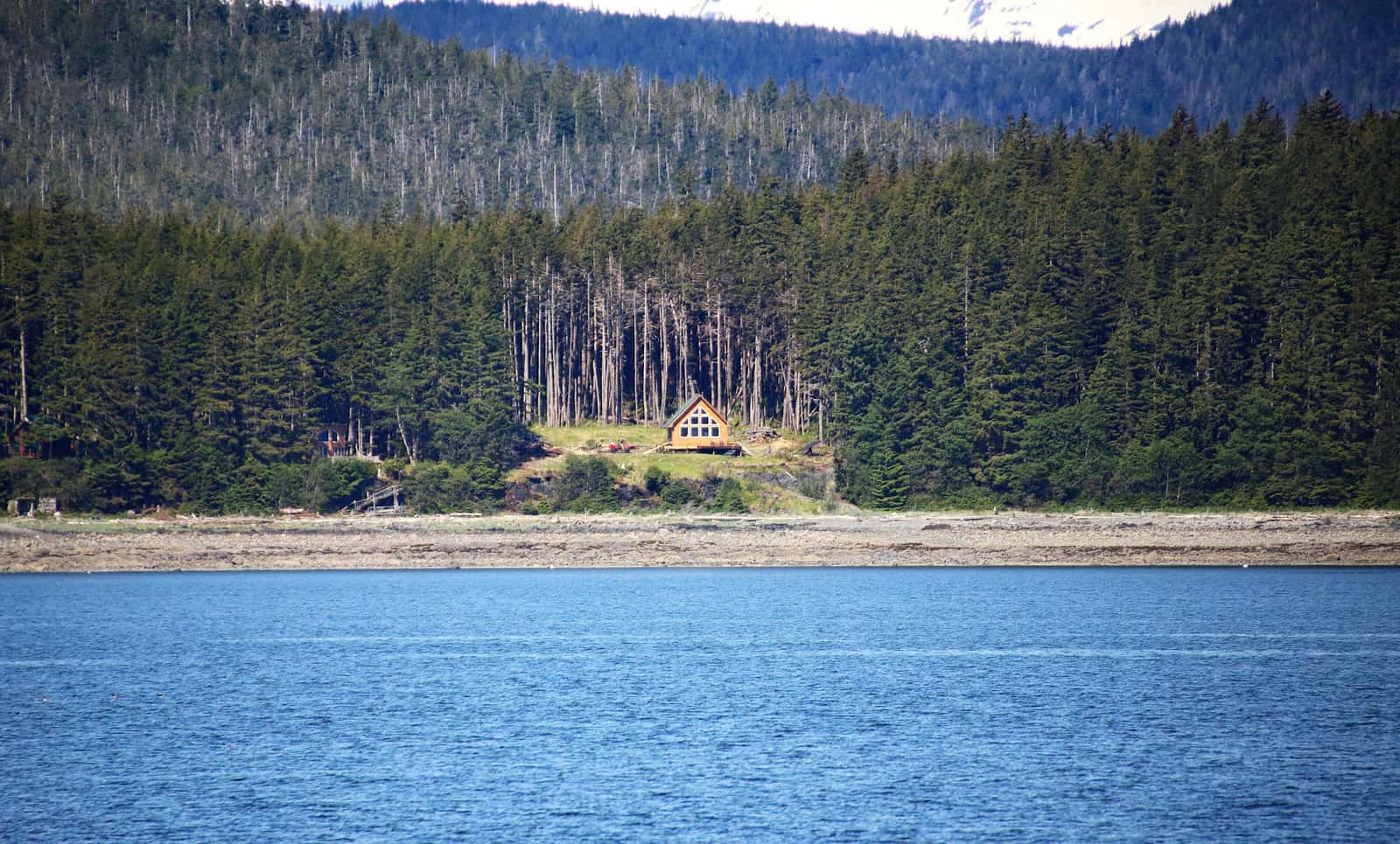
The bigger issue on the ground is usually the land itself: steep fjord walls and tall spruce and hemlock in Southeast Alaska, dense black spruce in the Interior, and deep snow almost everywhere. Starlink says “heavy snow completely covering the dish may cause intermittent connectivity or temporary loss of service”. More in Starlink in snow and which way the dish faces.
Don’t order yet if…
- the skyline rises past 3.5 fists on two or more sides from every spot on your property
- the only open sky is far up a slope where you can’t get power or a cable to the dish
- you live deep in a canyon or hollow and haven’t scanned with the Starlink app yet
- you’d need to clear trees on a ridge you don’t own
Questions this page answers
Does Starlink work in a valley?
Usually, yes. What matters is how high the ridges rise in the dish’s sky. In a wide valley the mountains sit low on the horizon and don’t get in the way. In a narrow valley, where the walls rise above about 35° on both sides, expect dropouts unless you find a more open spot.
Does Starlink work in the mountains?
Yes, in many mountain homes. Ridge tops, open slopes and wide valleys are often easy. Deep canyons and steep-sided hollows are hard. Measure the skyline from your spot, then confirm with the Starlink app.
Will a taller pole get my dish above a ridge?
Rarely. Raising the dish 40 ft barely changes the angle to a ridge thousands of feet away: a 1,000 ft ridge 3,000 ft off goes from about 18.4° to 17.7°. Poles fix nearby trees. For ridges, move the dish sideways or up the slope instead.
Will Starlink work in a canyon or a hollow?
Sometimes. The walls are close and steep, so they often rise past 35° on both sides. Look for the widest bend, a spot partway up the slope, or a clearing where the ridge sits farther away, and scan each one with the app.
Is Starlink different in Alaska?
Starlink does not say homes in Alaska or other far-north areas need a clearer or differently aimed view of the sky. Starlink does say customers in certain remote places, Alaska among them, will see higher latency, and that some areas of Alaska are outside its professional installation areas.
Is a hill the same as a tree for Starlink?
For the geometry, yes: both block the sky by how high they rise from the dish. The differences are practical. A hill never leafs out or sways, so a scan in any season is honest, but you can’t trim it, and a pole rarely gets over it.
What we checked this page against
- Standard 4 X spec sheet, PDF · seen Nov 3, 2026
- Business install: choosing a location (support article) · seen Nov 3, 2026
- Aligning the dish (support article) · seen Nov 3, 2026
- Measuring the sky with your hand (EarthSky) · seen Nov 3, 2026
- Checking a spot before you install (support article) · seen Nov 3, 2026
- Standard 4 X setup guide (support article) · seen Nov 3, 2026
- US specifications, DOC-DF-1915-15313-48 · seen Nov 3, 2026
- Starlink installers (support article) · seen Nov 3, 2026
- Snow and ice performance (support article) · seen Nov 3, 2026
Each number on this page traces back to one of these entries; our fact rules explain how. If a reading has drifted, the corrections log shows how it gets fixed.